ACL Tear or Knee Sprain? How to Recognise a Sports Injury and Understand Your Treatment Options
A sudden twist while playing cricket, an awkward landing during badminton or a quick change of direction in football can leave you with unexpected knee pain.
Sometimes, the discomfort is caused by a relatively mild ligament injury. In other cases, the injury may be more serious, involving a partial or complete tear of the anterior cruciate ligament (ACL).
Both can cause pain and swelling, which makes it difficult to understand the severity of the injury based on symptoms alone.
An ACL tear is a type of knee ligament sprain. While a mild sprain involves stretching or minor damage to ligament fibres, a severe sprain may involve a complete ligament tear.
Understanding the symptoms and knowing when to seek medical attention can help you make informed decisions about treatment and recovery.
What Is an ACL Injury?
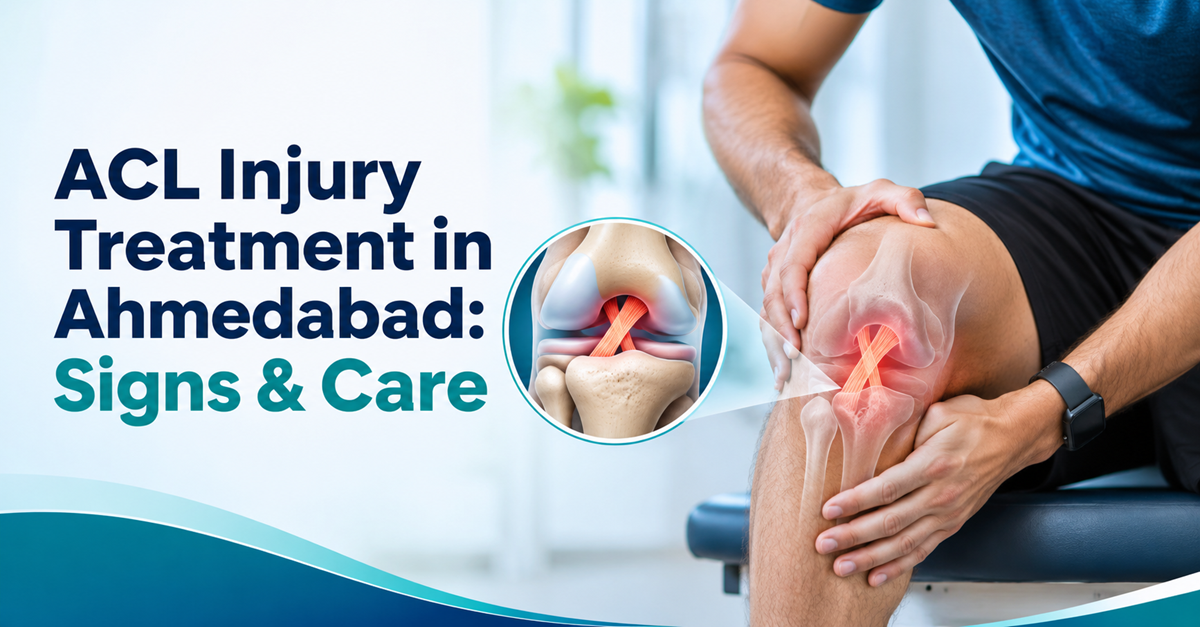
The anterior cruciate ligament, commonly called the ACL, is one of the main ligaments that stabilise the knee.
It connects the thighbone (femur) to the shinbone (tibia) and helps control forward movement and rotation of the shinbone relative to the thighbone.
The ACL is particularly important during activities involving sudden turns, changes in direction, jumping and landing.
An ACL injury occurs when the ligament is stretched beyond its normal capacity, causing partial or complete damage.
These injuries are commonly associated with sports, but they can also occur during falls and accidents.
What Is the Difference Between an ACL Tear and a Knee Sprain?
A knee sprain refers to an injury affecting one or more ligaments around the knee.
Ligament sprains are generally classified by severity.
Grade 1: Mild Sprain
The ligament fibres are stretched or experience minor damage, but the ligament usually continues to support the joint.
Symptoms may include mild pain, tenderness and limited swelling.
Grade 2: Partial Ligament Tear
Some ligament fibres are torn.
The knee may become painful, swollen or less stable, depending on the ligament involved and the severity of the injury.
Grade 3: Complete Ligament Tear
The ligament is completely torn.
A complete ACL tear may cause significant knee instability, particularly during turning or pivoting movements.
It is important to understand that the term "knee sprain" describes a category of ligament injuries. An ACL tear is one specific injury within that category.
A physical examination, and sometimes imaging, is needed to determine which ligament is affected and how seriously it is injured.
Common Causes of ACL Injuries
ACL injuries frequently occur during sudden movements that place excessive stress on the knee.
Sudden Changes in Direction
Quick turning or pivoting movements can place substantial forces on the ACL.
This may happen during football, basketball, badminton or similar activities.
Incorrect Landing After a Jump
Landing awkwardly with the knee in a vulnerable position can cause ligament damage.
Sudden Stopping or Slowing Down
Rapid deceleration during running or sports can place additional stress on the knee.
Direct Impact
A collision or forceful impact involving the knee can damage the ACL, sometimes alongside other ligaments.
Falls and Accidents
ACL injuries can also occur outside organised sport, including during certain falls or twisting accidents.
6 Common Symptoms of an ACL Tear
Symptoms vary depending on the severity of the injury and whether other knee structures are affected.
1. A Popping Sensation
Some people report hearing or feeling a pop at the time of injury.
However, a popping sound does not automatically mean the ACL is torn, and an ACL tear can occur without one.
2. Rapid Knee Swelling
The knee may swell within the first few hours following a significant ACL injury.
3. Knee Pain
Pain may occur immediately after the injury.
Its intensity varies, and severe ligament damage does not always cause the most severe pain.
4. A Feeling of Instability
The knee may feel as though it is giving way, especially when turning or changing direction.
This is an important symptom to discuss with an orthopaedic specialist.
5. Difficulty Walking
Swelling, pain and reduced stability can make walking uncomfortable.
6. Reduced Range of Motion
You may find it difficult to fully bend or straighten your knee after the injury.
Other knee injuries, including meniscus tears and fractures, can cause similar symptoms. A medical assessment is important for an accurate diagnosis.
What Should You Do Immediately After a Knee Injury?
If you injure your knee during sport or physical activity, stop the activity rather than attempting to play through significant pain.
Initial measures may include:
Protect the knee: Avoid movements that worsen pain or make the knee feel unstable.
Rest from aggravating activities: Limit demanding movements until the injury has been assessed.
Apply ice: A cold pack wrapped in a towel can help manage pain and swelling. Avoid placing ice directly on the skin.
Use appropriate compression: A suitable elastic support may help control swelling, provided it does not restrict circulation.
Elevate the leg: Raising the leg while resting may help reduce swelling.
Avoid returning to sport simply because the initial pain has improved.
If the knee is badly swollen, unstable or difficult to bear weight on, arrange a prompt medical assessment.
Seek urgent care if you cannot walk, the knee is visibly deformed, you have numbness following the injury or you experience severe pain.
How Is an ACL Tear Diagnosed?
An orthopaedic specialist will usually begin by asking how the injury happened.
The doctor may ask whether you:
- Heard or felt a pop
- Experienced immediate swelling
- Could continue playing
- Have difficulty bearing weight
- Feel that the knee gives way
- Have injured the same knee previously
Physical Examination
The specialist may assess swelling, movement and joint stability.
Specific clinical tests, such as the Lachman test, can help evaluate the ACL.
X-Rays
X-rays cannot directly show an ACL tear, but they may be used to assess possible fractures or other bone-related injuries.
MRI Scan
An MRI provides detailed images of the ACL, menisci, cartilage and other soft tissues.
It can help identify the extent of an injury and whether other structures have been damaged.
An MRI is not always required to diagnose an ACL tear. Your doctor will decide whether it is needed based on the clinical assessment.
ACL Injury Treatment Options in Ahmedabad
The right treatment depends on several factors, including:
- Whether the tear is partial or complete
- The stability of the knee
- Whether other structures are injured
- Your activity level
- Your occupation
- Your rehabilitation goals
- Your overall health
Some patients recover adequate function with rehabilitation, while others may benefit from surgical treatment.
Non-Surgical Treatment for ACL Injuries
Non-surgical treatment may be appropriate for certain patients, especially those with partial tears, stable knees or lower physical demands.
Physiotherapy
A structured rehabilitation programme may focus on:
- Restoring knee movement
- Reducing swelling
- Strengthening the quadriceps and hamstrings
- Improving balance and coordination
- Rebuilding confidence in the knee
- Reducing the risk of further injury
Activity Modification
Activities involving sudden twisting, cutting or pivoting may need to be avoided until the knee is sufficiently stable.
Knee Support
A doctor may recommend a brace or walking aid in selected cases.
Follow-Up Assessment
Regular reviews can help assess whether rehabilitation is improving knee function or whether instability remains a concern.
Non-surgical treatment does not mean ignoring the injury. It requires appropriate assessment and a structured recovery plan.
When Is ACL Surgery Recommended?
ACL reconstruction may be considered when the knee remains unstable or the patient's physical demands make reliable joint stability especially important.
Surgical treatment may be more relevant for:
- Athletes involved in pivoting or cutting sports
- People with repeated episodes of knee instability
- Patients with associated injuries requiring surgical attention
- Individuals whose work involves demanding physical movements
- Patients who cannot return to their desired activities despite appropriate rehabilitation
The decision is individual. A complete ACL tear does not automatically mean every patient requires surgery.
Your orthopaedic specialist should explain the expected benefits, risks and alternatives before recommending an operation.
What Happens During ACL Reconstruction Surgery?
ACL reconstruction is a procedure in which the damaged ligament is generally replaced with a graft.
The graft may be taken from one of the patient's own tendons or, in selected situations, from donor tissue.
The procedure is commonly performed using arthroscopic techniques, involving a camera and specialised instruments inserted through small incisions.
The surgeon positions and secures the graft to help restore knee stability.
The exact approach depends on the injury, patient requirements and surgical assessment.
Rehabilitation is an essential part of recovery after ACL reconstruction.
How Long Does ACL Injury Recovery Take?
Recovery varies considerably depending on injury severity, treatment and rehabilitation progress.
Recovery After a Mild Knee Sprain
Some mild ligament sprains improve over a few weeks, although recovery depends on the ligament involved and individual symptoms.
Recovery After a Partial ACL Tear
Rehabilitation commonly takes several months.
The knee must regain sufficient movement, strength and stability before more demanding activities can resume.
Recovery After ACL Reconstruction
Recovery following ACL reconstruction often takes many months.
Returning to running, jumping or competitive sport usually requires a gradual, supervised rehabilitation programme.
For some patients, a return to demanding sports may take around 9 to 12 months or longer. The decision should be based on objective recovery measures and medical clearance rather than time alone.
Returning too early can increase the risk of further injury.
Can You Play Sports Again After an ACL Injury?
Many people return to physical activity after ACL injury treatment, but outcomes vary.
The return-to-sport decision depends on:
- Knee stability
- Strength and flexibility
- Balance and movement control
- Absence of significant pain or swelling
- Confidence during sport-specific movements
- Medical and physiotherapy assessment
A gradual return is generally safer than immediately resuming full-intensity sport.
How Can You Reduce the Risk of Knee Ligament Injuries?
Not every ACL injury can be prevented, but training habits can help reduce the risk.
Consider incorporating:
Strength Training
Strengthening the thigh, hip and core muscles helps support lower-limb control.
Balance and Coordination Exercises
Neuromuscular training can improve control during movement and landing.
Proper Landing Techniques
Learning to land with good knee and hip alignment can help reduce potentially harmful forces.
Suitable Warm-Up Programmes
Structured injury-prevention programmes that combine strengthening, balance and movement training may reduce ACL injury risk.
Gradual Training Progression
Increase training demands progressively and allow appropriate recovery between sessions.
A physiotherapist or qualified sports professional can help design a programme suitable for your sport.
Get Your Knee Injury Assessed at Amul Hospital, Ahmedabad
If you have experienced a sudden knee injury, persistent swelling or a feeling that your knee is unstable, it is important to understand the cause before returning to demanding activities.
Contact Amul Orthopaedic & Multispeciality Hospital in Ahmedabad to enquire about an orthopaedic consultation for knee ligament or sports injuries.
Medical disclaimer: This article is intended for general education and does not replace professional medical assessment. Treatment decisions and recovery timelines depend on your individual injury and medical circumstances.
Frequently Asked Questions
Can an ACL tear heal without surgery?
Some people with ACL tears achieve good functional stability through rehabilitation without surgery. However, complete tears often have a limited capacity to heal normally, and some patients continue to experience instability.
Is ACL reconstruction necessary for every athlete?
No. Treatment depends on knee stability, the injury pattern, the sport involved and the athlete's goals. A specialist should assess whether surgery is appropriate.
Which specialist treats ACL injuries?
An orthopaedic specialist with experience in knee and sports injuries can assess ACL damage and discuss suitable treatment options.