- Emergency & trauma care, 24/7: +91 98241 31122
- 2nd Floor, The Green Parmeshwar, Jagatpur - Tragad Road, Ahmedabad - 382470
SPORTS INJURY & REHABILITATION
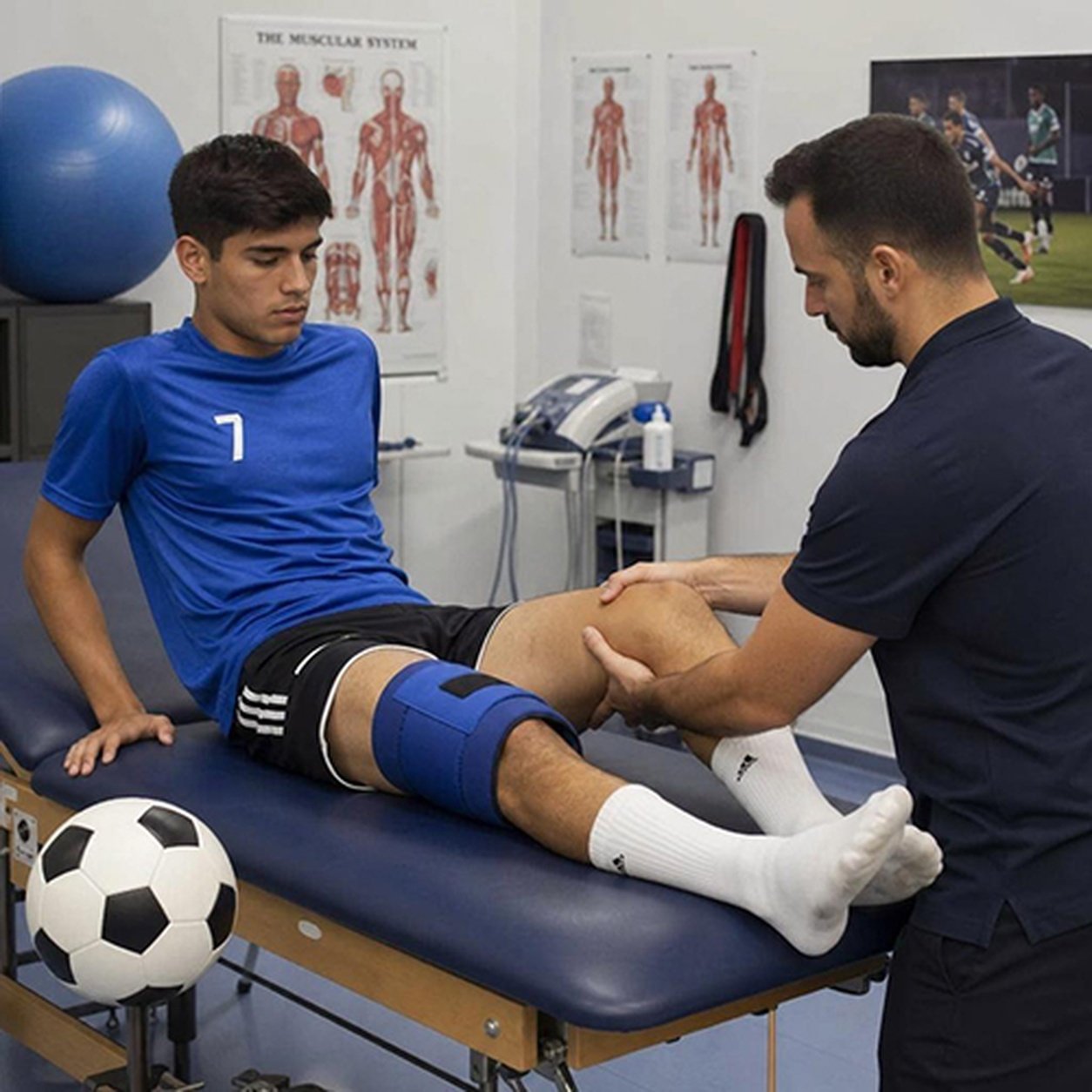
At Amul Orthopaedic & Multispeciality Hospital, our dedicated Sports Injury and Rehabilitation Centre caters to professional athletes, fitness enthusiasts, marathon runners, and active individuals of all ages. Whether you have suffered an acute ligament tear on the field or struggle with chronic runner's knee, our sports medicine specialists and certified physiotherapists help you heal faster and return to peak physical performance.
We combine minimally invasive arthroscopic joint repair with advanced evidence-based rehabilitation protocols, dry needling, manual therapy, and biomechanical movement analysis under one roof in Tragad, Ahmedabad.
CONDITIONS WE TREAT
Knee instability, swelling and giving-way sensation after sudden twisting injuries.
Clicking, locking and joint line knee pain following sports movements.
Overhead throwing injuries, tendonitis and weakness in cricketers, swimmers and gym-goers.
Torn ankle ligaments, chronic swelling and rolling ankles on uneven turf.
Lateral and medial epicondylitis causing chronic forearm and gripping pain.
Anterior knee pain aggravated by running, jumping, squatting or stair climbing.
Overuse bone micro-fractures common in long-distance runners and dancers.
Sudden sprinting muscle tears, quadriceps strains and calf muscle spasms.
Labral Bankart tears and shoulder capsule laxity causing repeated dislocations.
Severe pain and stiffness in the heel cord during jumping, running and walking.
Athletic pubalgia and groin tightness affecting kicking and lateral agility.
Phased rehabilitation after ligament reconstruction for safe return to competitive sports.
QUICK INQUIRY
Get evaluated by experienced sports medicine doctors and physiotherapists to prevent re-injury and build lasting strength.
Share your details and our team will call you shortly.
TREATMENTS & PROCEDURES
Keyhole reconstruction of ACL, PCL, and meniscus using anatomic graft placement.
Customized exercise protocols targeting neuromuscular agility, power and balance.
Relief of deep muscular trigger points and chronic tightness for faster recovery.
Dynamic joint support to facilitate muscular activation and reduce inflammation.
Video analysis of running gait, squat mechanics and landing patterns to fix imbalances.
Regenerative injections using patient's own platelets to accelerate tendon healing.
Pre-season conditioning and core stability training to safeguard against injury.
Objective strength and hop testing before clearing athletes to return to full competition.
YOUR TREATMENT JOURNEY
Clinical stress tests and high-resolution imaging to evaluate ligament and cartilage integrity.
RICE protocol, gentle range-of-motion therapy and electro-modalities to restore joint fluid balance.
Targeted resistance training to re-educate quadriceps, hamstrings, glutes and core.
Ladder drills, balance boards and plyometric jumping drills restoring full joint confidence.
Sport-specific drills, cutting maneuvers and passing functional agility criteria.
WHY CHOOSE US
Orthopaedic surgeons and specialized sports physiotherapists working in unison.
Trained in managing injuries for cricketers, runners, football players and gym athletes.
Equipped with rehabilitation equipment, resistance rigs and functional training turf.
Minimally invasive keyhole procedures for accelerated biological healing.
Direct attention from licensed therapists rather than generic unmonitored exercises.
Holistic biomechanical correction to ensure you return stronger and avoid repeat tears.
OUR SPECIALISTS
FAQS
Essential answers about ACL surgery, sports physiotherapy, healing timelines and sports performance.
More AnswersNot necessarily. Partial tears or non-athletes who do not participate in pivoting sports can sometimes manage with intensive physiotherapy and bracing. Active individuals, athletes, or those with knee instability and meniscus tears usually require arthroscopic reconstruction.
Physiotherapy typically begins within 24 to 48 hours after surgery with gentle ankle pumps, quadriceps sets and guided passive knee bending to prevent stiffness and blood clots.
Light jogging and straight-line running usually start around 3 to 4 months. Sport-specific agility drills begin at 6 months, and full competitive clearance is typically achieved between 9 to 12 months.
Dry needling is based on Western medicine anatomy and neurophysiology. It uses fine filament needles directly into tight myofascial trigger points to release muscle knots, reduce pain and restore blood flow.
Repeated ankle sprains are usually caused by chronic ligament laxity and poor proprioception (joint position sense) after an incompletely rehabilitated initial sprain. Targeted balance and peroneal strengthening can fix this.
Yes, by avoiding sudden spikes in mileage (following the 10% rule), using proper footwear suited for your foot arch, incorporating calf/hip strengthening, and cross-training.
OTHER SPECIALITIES